The Wattz difference
This harvest is a big one and across a lot of the south it has come in early.
ABARES put the national winter crop at 61 million tonnes in its September report. That is down about 12 per cent on last year, but still around 16 per cent above the ten-year average: 29.9 million tonnes of wheat, 16.4 of barley, 7.3 of canola. Victoria, South Australia, southern New South Wales and much of Western Australia came through a wet, mild winter in good shape. Northern New South Wales and Queensland have had a much harder run of it.
A big crop is good news. It also means long days and long days at harvest mean long nights.
The hours nobody puts in the brochure
Ask anyone who runs a header what harvest actually looks like and you get the same answer: you go while you can go. The moisture comes right at four in the afternoon and you are still cutting at eleven. The chaser bin is alongside you in the dark. You are unloading on the move, watching an auger you can barely see, trying to keep the spout over the bin and the wheels out of the standing crop.
We hear this at every field day we do and it is rarely about the machine. It is about the light. Factory halogens throw a weak yellow pool that dies off a few metres in front of you. The stubble lights show you the ground but not the edge of the crop. The grain bin is a black hole, so you are guessing at the last few tonnes. And twelve hours of squinting into that gets you home with a headache and sore eyes, ready to do it again tomorrow.
Nobody asks us for more lumens. What people want is to see the edge of the crop, to get through a long night without feeling wrecked and to stop worrying about what is out there in the dark. That is the problem we are in business to fix.
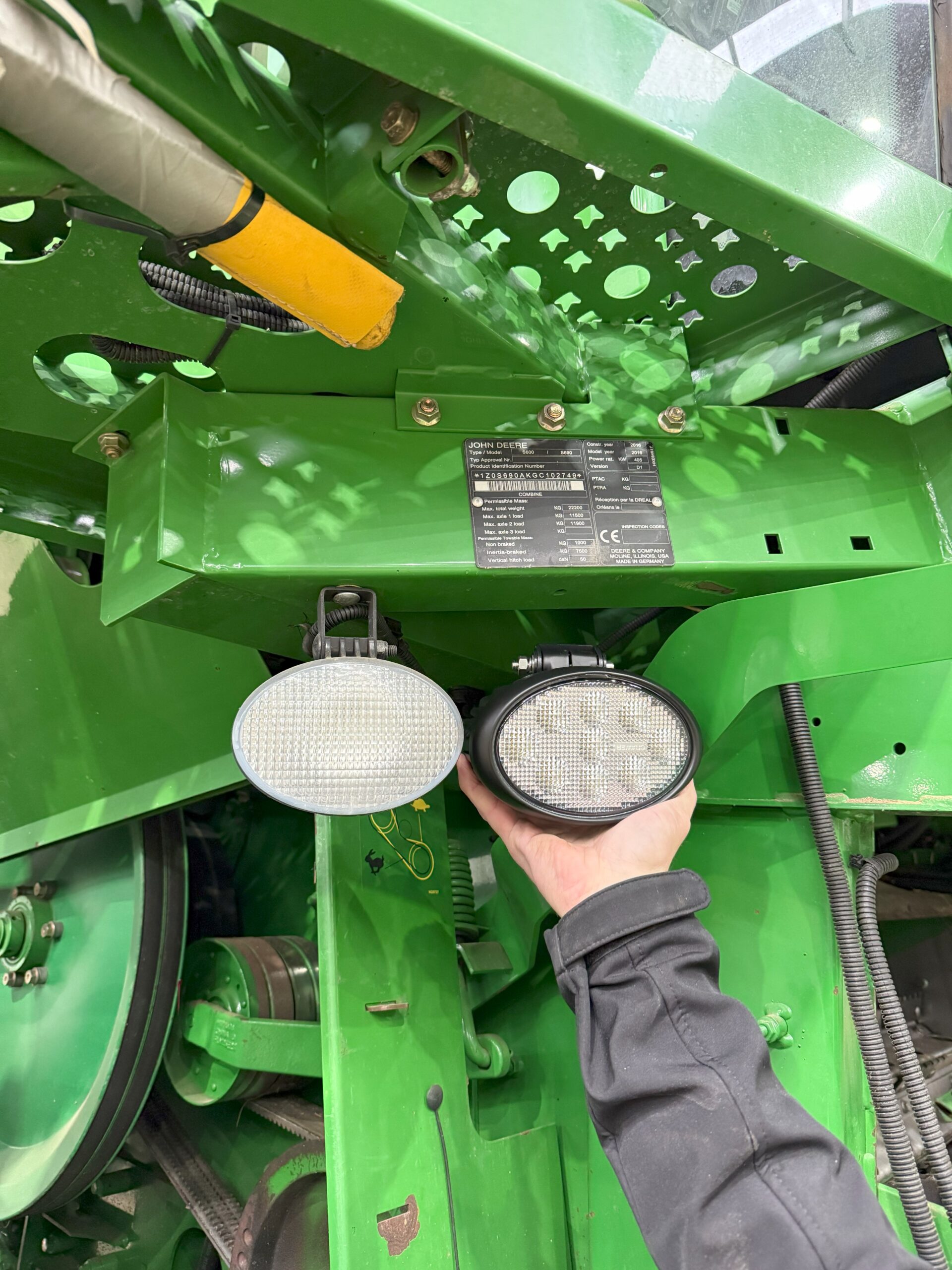
The answer is proper LED work lights. Swap the factory halogens for a full set of LEDs and the weak yellow pool becomes clean white light that carries out past the front of the header and across to the edge of the crop. You can see the stubble, the chaser bin alongside you, the auger spout over it and the last few tonnes going into the grain bin. You stop guessing and start seeing what you are doing.
But it only works if the whole machine is lit, with lights that actually fit it. That is why we build complete packages and why we only build them for certain machines.
Why we only build these packages for the common machines
Here is the part we want to be straight about. We do not sell a header lighting package for every machine in the country. We build them for the headers that turn up most often in Australian paddocks, and that is deliberate.
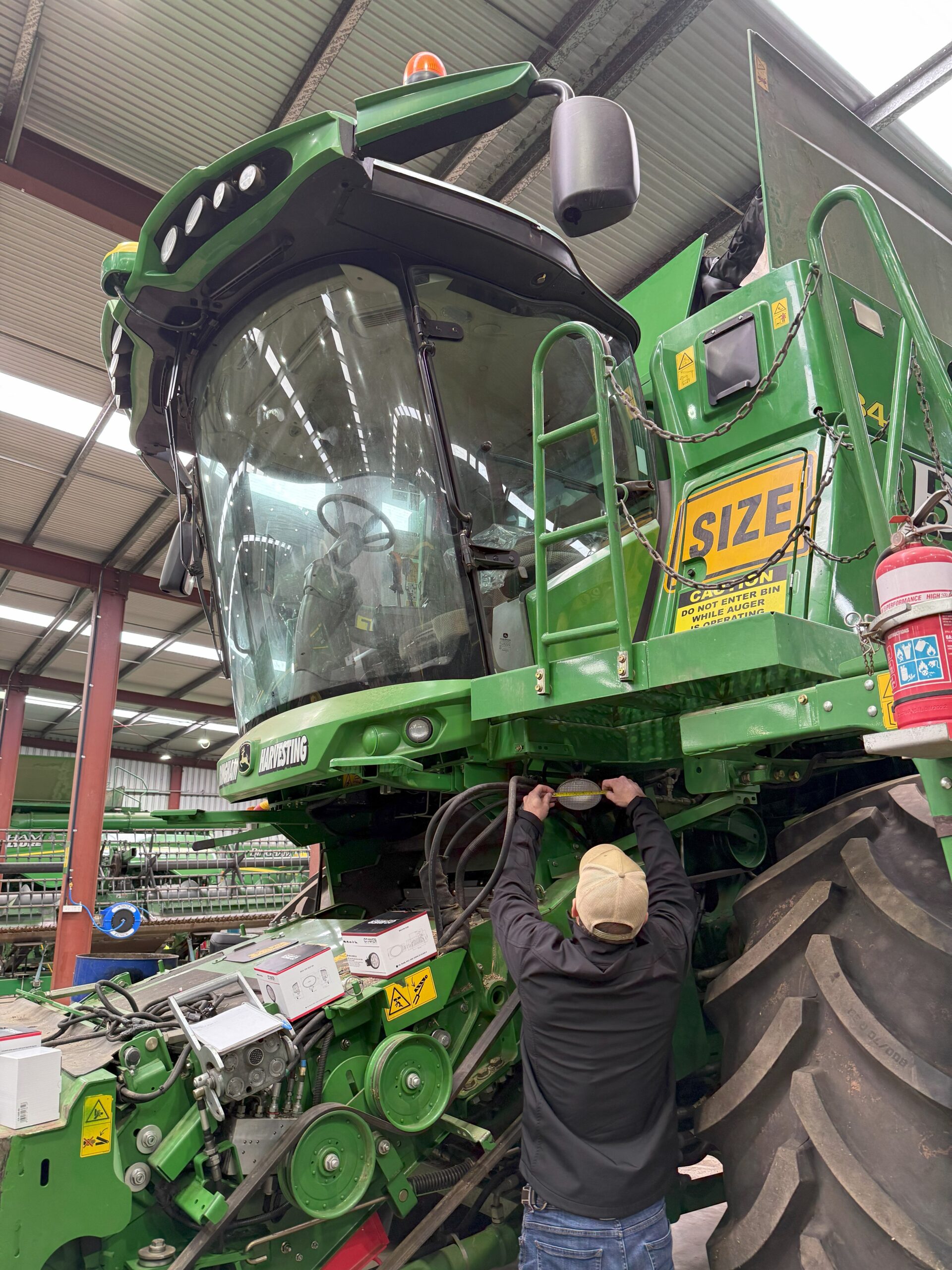
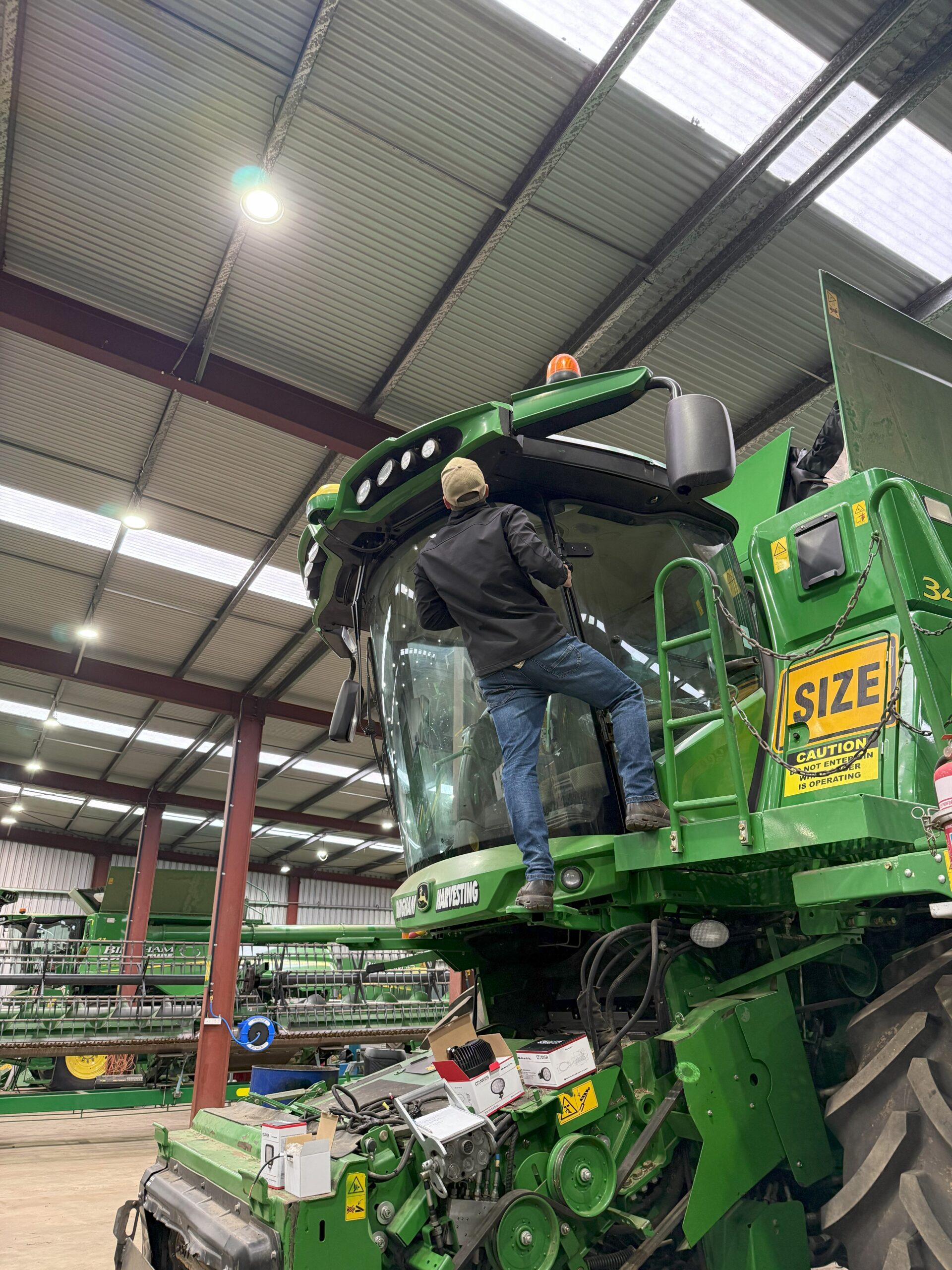
A complete package is a lot of work to get right. Every mounting position on that specific machine has to be worked out: how many lights across the front roof, which of them need a spot beam and which need a flood, what goes on the cowlings, the grain bin, the unloading auger, the rear discharge. Then every connector has to match what is already on the machine, so the adapter cables come in the box and nothing has to be spliced together in the shed at nine at night.
Do that properly and you open one box, work your way around the machine, and you are done. Do it as a universal kit with a bag of brackets that nearly fit and you have handed someone a weekend of drilling right when they do not have a weekend to give. We would rather do a handful of machines properly than forty of them badly.
These are the headers we currently build a complete package for:
- John Deere 9670 / 9870
- John Deere S670 / S680 / S690
- John Deere S760 / S770 / S780 / S790
- Case IH 7120
- New Holland CR8090
- New Holland CR9.90
What is actually in the box
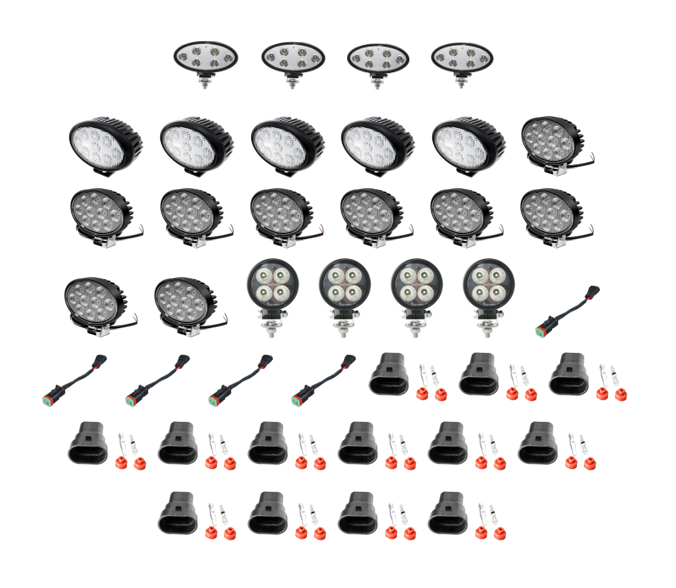
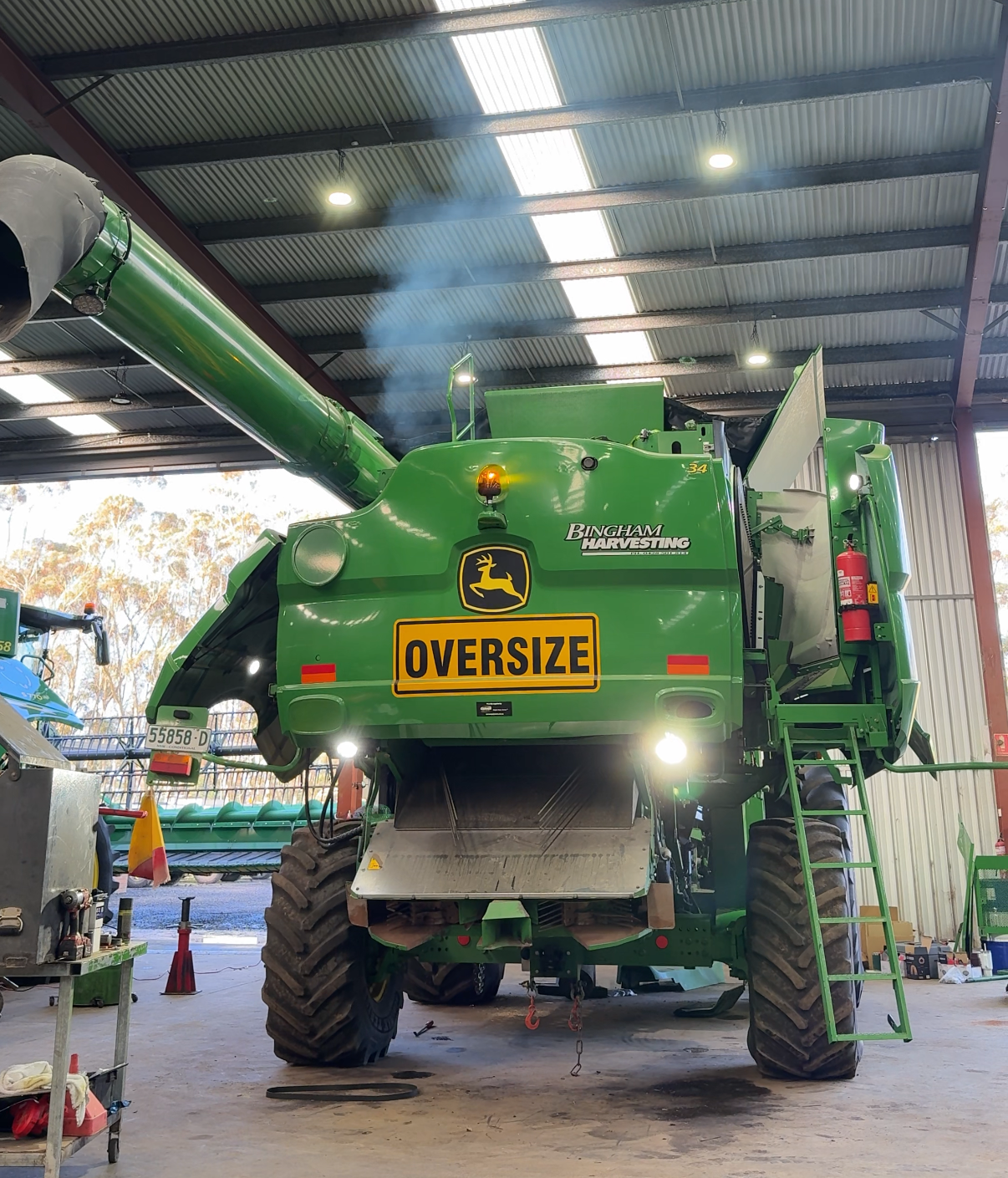
Take the John Deere 9670/9870 package as the example. It is eighteen CRAWER LED work lights and twelve adapter cables, and it is set out by position on the machine rather than by part number:
- Front roof – four 65W spot for reach, plus two 65W flood on the outside positions for width.
- Service lights – eight 50W across the engine and side cowlings.
- Rear discharge – two 50W.
- Grain bin – one 50W, so you can see the last few tonnes go in.
- Unloading auger – one 50W, for unloading on the move after dark.
The other five packages follow the same logic on their own machines, so the counts differ: the CR9.90 package runs to twenty-nine lights, the CR8090 to thirteen. Across the range the lights are CRAWER, 6000K white, IP67 or IP68 sealed, powder-coated aluminium housings, 10–32V input, and RFI-free to CISPR 25 class 4, so nothing interferes with the GPS or the radio. Three-year warranty on all of it.
They also go where the halogens were. Same voltage, original mounting positions, and the adapters for your connectors are in the box, which is what makes it an afternoon in the shed rather than a wiring project.
And clean white light is not only about seeing further. It is less tiring over a long night, which matters as much at two in the morning as anything on the spec sheet.
If your header is not one of the six
Then we have not forgotten you — we just have not built a full package for that machine yet. There are three easy ways forward.
- Put your make and model into the Configurator on our website and it will show you exactly which lights fit, so you can build the set yourself, position by position.
- Or contact André He has run machinery himself, he will talk through what you are on and what you are trying to see, and he will tell you straight if you do not need the full set.
- If you would rather hear it from someone who has already done it, have a read of our customer stories.
One last thing, and we say it every year: get it fitted before the header goes back into the crop, not halfway through a run. All six packages are in stock now. Fitting one takes an afternoon in the shed. It takes a good deal longer when the header is parked mid-paddock and everyone in the district wants the same box.